Learning Outcome 3
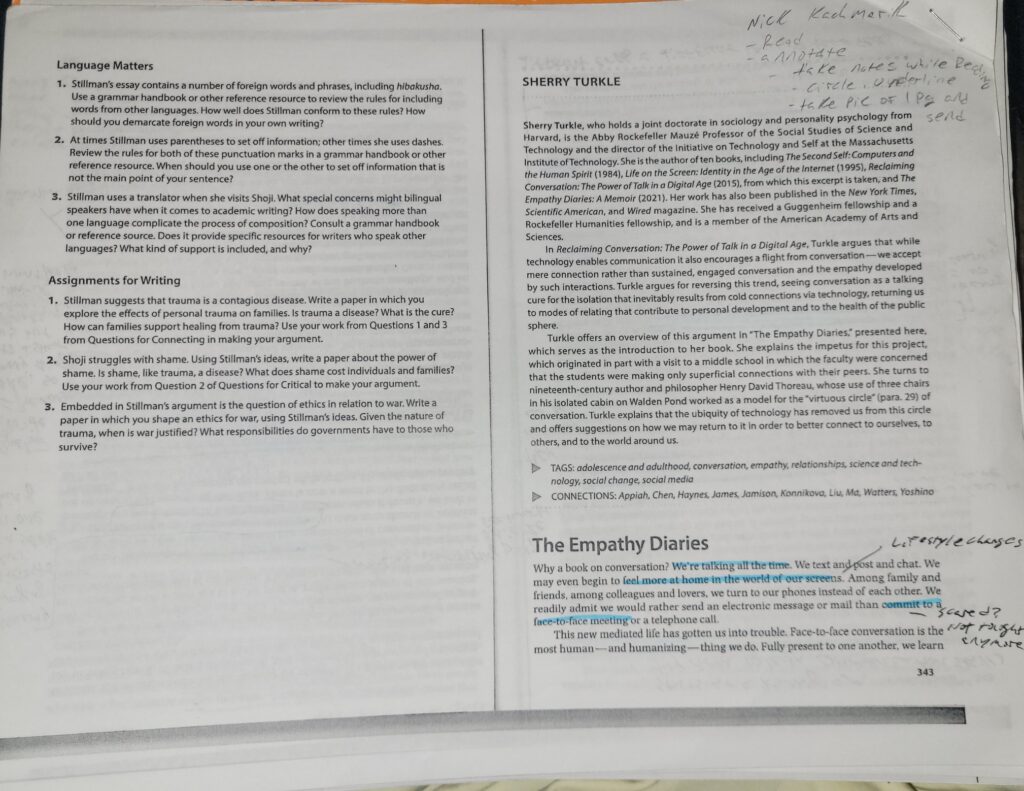
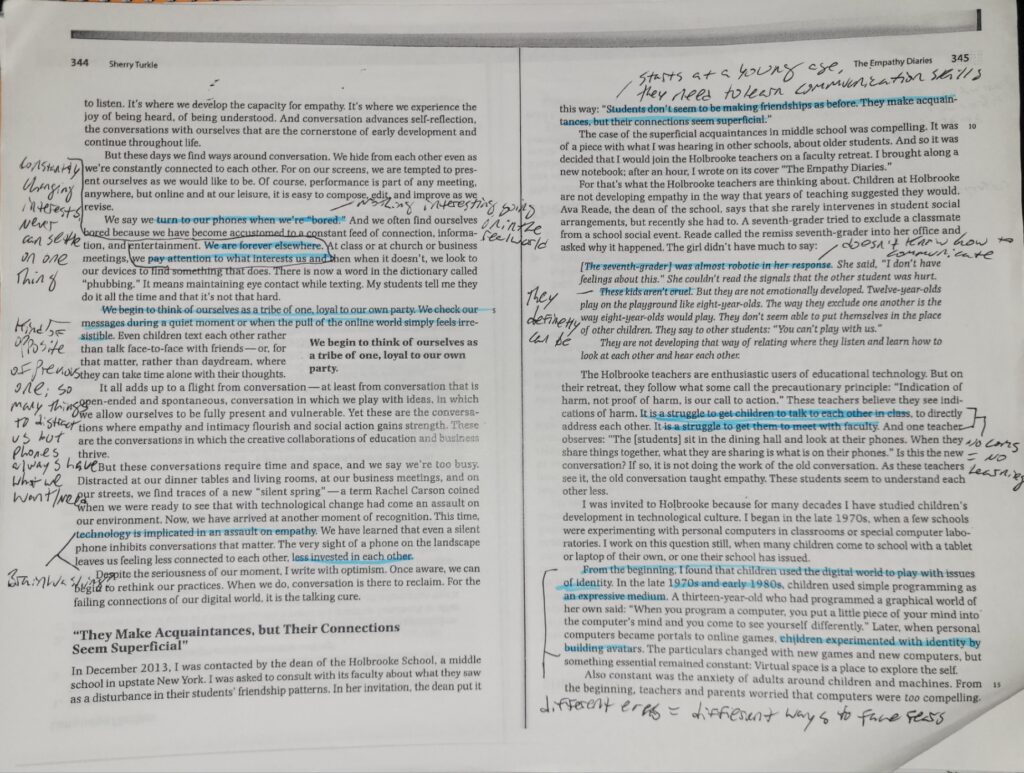
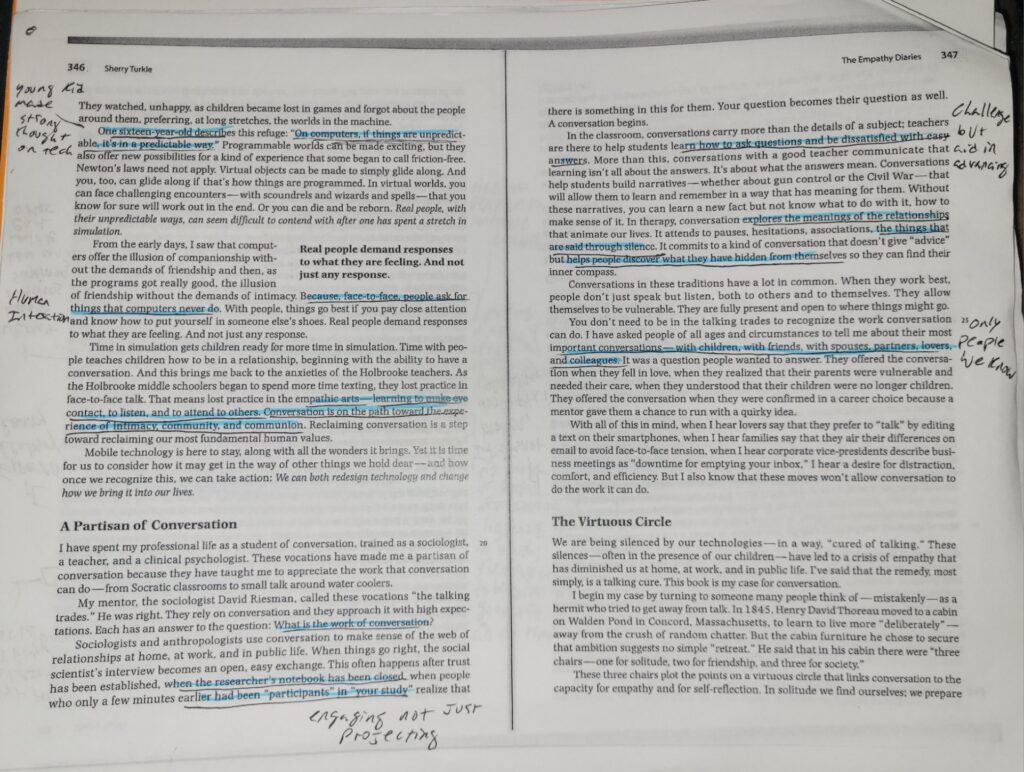
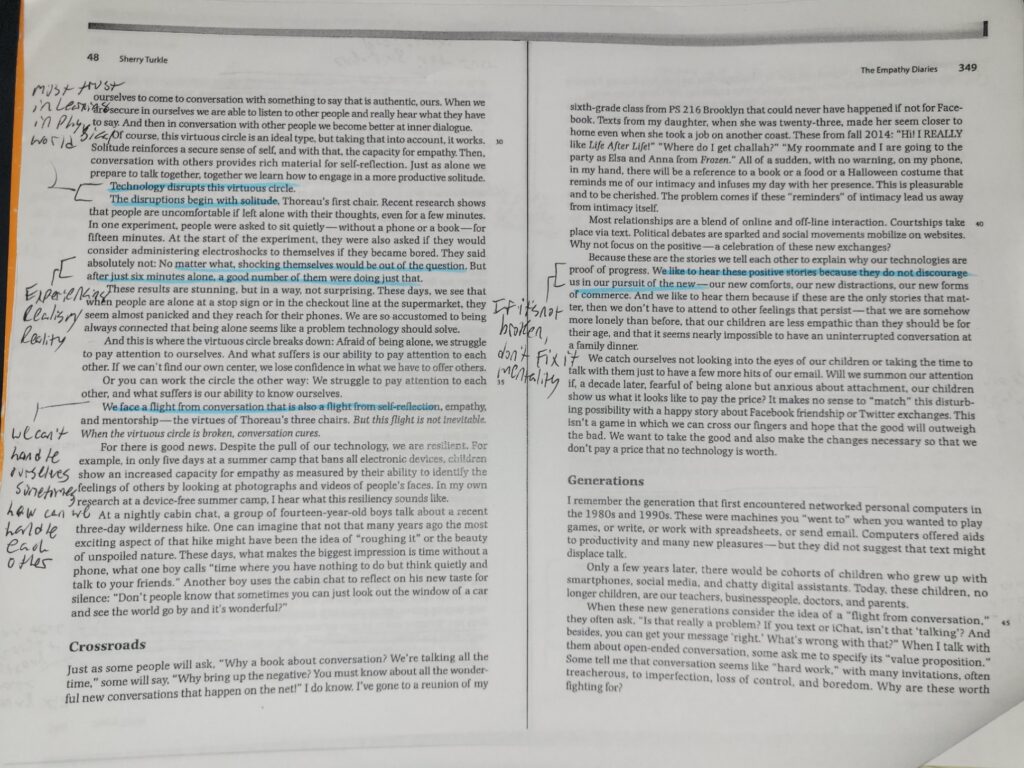
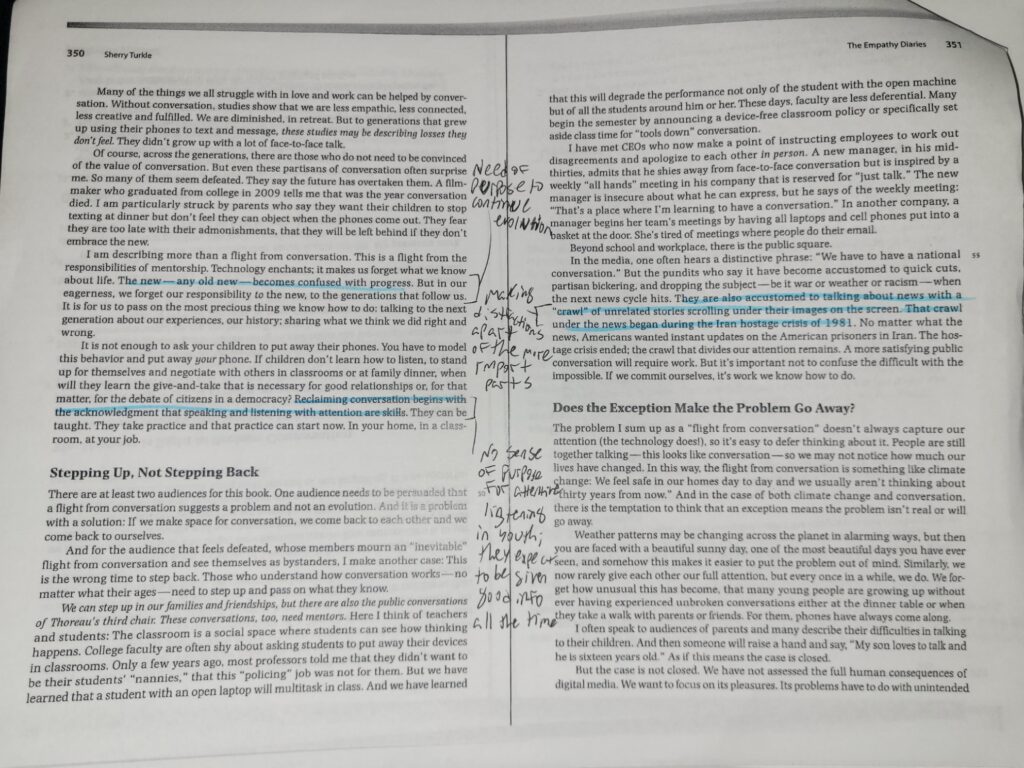
From the annotated article below, I have displayed pictures of Sherry Turkle’s article, The Empathy Diaries. This article mainly revolves around the ideas of how the current youth generation have been affected by the introduction of technologies, such as phones, tablets, and computers, at a very young age. The task of this learning outcome is to discuss how the styles of language we have brought up in class deviate from the different approaches of active listening and critical reading and thinking. This article could not have stronger examples. From the very beginning on page 343, Turkle fascinates over the idea of the “commit to a face-to-face meeting” (Turkle). The youth of today’s first world countries are, in theory, scared. They do not know what real struggle is. It is just a part of their lives that they have become so attached to, even dependent on, the devices given to them by their parents at a ridiculously young age. Shortly after, on page 343, she says that “we are forever elsewhere… we pay attention to what interests us and then when it doesn’t, we look to our devices” (Turkle). It is so obvious that our minds are in constant loops and will rarely ever be able to refocus back to what is solid and tangibly in front of us. This constant need to be in a realm of LCD screens and pretending to be a part of some else’s life. Someone we may not know or ever meet in person. It is here that we have lost touch with reality and all abilities of that active listening to others who are trying to be a part of our lives. It has become a part of everyday life that we don’t sit down, take a minute, and actually digest the information given to us from others. Many of our parents have probably said this at some point; the famous, in one ear one ear and out the other. It most certainly starts at a young age. It is so crucial that young children are exposed to the experiences of communication with others, both their age and older. This will hardwire their minds, certainly in a good way, to be much more approachable later in life. To have the confidence of talking to friends, new associates, or the most notorious option, public speaking. This is when the critical thinking and deep understanding of that communication can physically alter the way other perceive the speaker. It allows for a much deeper connection to the information being presented. These devices have absolutely come with a price to pay. We have gone into an intellectual debt. We can make money, that’s not an issue. What we can’t make up for is the knowledge and experiences that train our minds to be wary of what to say, when to say it, and how to surgically manipulate language to our advantage.